
Searching for a Warrant in Hanover County
Hanover County has no public, countywide warrant search. Virginia Courts offers case information for General District Court and selected criminal or traffic matters, with a court selector and name, case-number, or hearing-date fields. Treat the result as a case lead. Ask the court whether a separate capias or recall appears in its process record.
Use the court printed on the paper and keep the exact spelling, case number, and hearing date at hand. A felony may need Circuit Clerk confirmation; an adult traffic case usually begins with the GDC clerk. For a personal arrest concern, talk with counsel before deciding whether to appear in person.
- Use the official Virginia case search for a covered GDC traffic or criminal file, choosing the court before reading a result.
- Search by the name as it appears on the summons, or use the case number or hearing date when known.
- Call Circuit, GDC, or JDR according to the case type; Hanover has no separate Ashland municipal court.
- Ask HCSO Records about an existing agency-held record or service attempt if that is the question.
- For custody or initial bail, use jail and magistrate contacts; for federal process, contact EDVA or counsel.
Hanover County All-Warrant Search Limits
The HCSO Most Wanted page displays a selected public program list, not every active process. The HCSO homepage also links to a jail booking service, which is for current custody. Neither channel is a complete warrant database. Virginia has no single public statewide active-warrant search in the inspected court sources.
That division matters when a search is empty. A matter may belong to a different court, be restricted, or have changed after a page was checked. Call the issuing clerk or HCSO through an official number to ask what can be confirmed. Do not read a blank result as a legal clearance.
Warrant Search Fields Explained
The Virginia case-information interface asks the user to choose a court and then supply one of several locators. It is not an HCSO warrant form, and it does not expose a warrant-number field for a countywide search. Use the same spelling as the court document when possible.
A name can lead to more than one case. Keep the court and hearing date with the result, then ask the clerk about process status instead of guessing from a charge or payment line.
| Field Label | Type | Required | Notes |
|---|---|---|---|
| Last name | Text | For name search | Enter the form shown on the summons or warrant |
| First / middle | Text | Matching detail | Use the name as written when known |
| Case number | Text | Alternative locator | Useful when printed on a ticket or notice |
| Hearing date | Date | Alternative locator | Can help find a docket entry, not prove FTA process |
| Court | Selection | Choose jurisdiction | Confirm Hanover before relying on a match |
Exact Names Help Hanover County Searches
Virginia Courts advises entering a name as it appears on the summons or warrant. Last, first, and middle names are supported, and a case number or hearing date can be used instead. The research did not verify partial-name behavior, alias matching, or a local warrant-number format, so do not assume those features.
When a relative is helping, share only the details needed to identify the case with the clerk. Do not put a Social Security number or full birth date in ordinary email. If the online result has a similar name, compare court, date, and case number privately before calling.
What a Warrant Search Shows
A case search may return a court, case number, hearing date, charge, or payment option for an eligible matter. Those details help locate a file. They do not establish that an arrest warrant is currently executable or that a recall has reached the service agency.
Hanover County has no documented sample public warrant result with a fixed number pattern. Use the case number printed by the court rather than copying a made-up example. Ask the clerk to explain any status label that affects your next step.
| Case locator | CASE NUMBER ON COURT NOTICE |
|---|---|
| Court / division | Shows where to call next; verify that it is a Hanover court |
| Hearing date | Helps locate a docket event, but does not alone prove a missed appearance |
| Charge or case type | Provides context for the clerk; avoid treating it as warrant status |
| Payment option | May apply only to eligible cases and is separate from recall |
Hanover County Case Checks Across Offices
General District Court handles adult traffic and misdemeanors, along with preliminary felony hearings. Circuit Court keeps the felony file and misdemeanor appeals. JDR handles juvenile, support, custody, and domestic-relations matters, where confidentiality rules limit public search. The clerk for the correct court is the best case-record contact.
HCSO may have a service record, while Pamunkey Regional Jail answers current-custody questions. A custody entry and a court case are different records. For the Hanover County outstanding-warrant list limits, use the related page.
Where to Check Warrants in Hanover County
Hanover County court process is not housed in one sheriff portal. The Circuit Clerk can direct a felony file or capias question; the GDC clerk handles adult traffic and misdemeanor matters; JDR is the route for juvenile or family matters. HCSO Records can address its own service and agency records.
For a new complaint or after-hours bail, Virginia describes a 24-hour magistrate function. Local magistrate routing is listed through Pamunkey Regional Jail. These contacts are not a published warrant-status hotline, so ask whether the office is the right place before visiting.
Hanover Circuit Clerk
Felony and appeal case records
804-365-6151
Hanover GDC Clerk
Traffic and adult criminal matters
804-365-6191
Hanover JDR Clerk
Juvenile and domestic-relations matters
804-365-6200
Check the Circuit Court, General District Court, or JDR Court page that matches the case.
HCSO Requests for Hanover County Warrant Records
HCSO accepts focused records requests by email, phone, mail, or in person. A requester should give a name and legal address as the law permits, identify an existing record with reasonable detail, and provide a way to respond. The office need not create a new live list or certify that no warrant exists.
Records and FOIA staff may withhold investigative files, witness details, techniques, and other protected material. Start with the HCSO Records and FOIA instructions and ask which office maintains the record.
HCSO’s official request instructions explain why a broad all-warrants request may not produce a searchable roster.
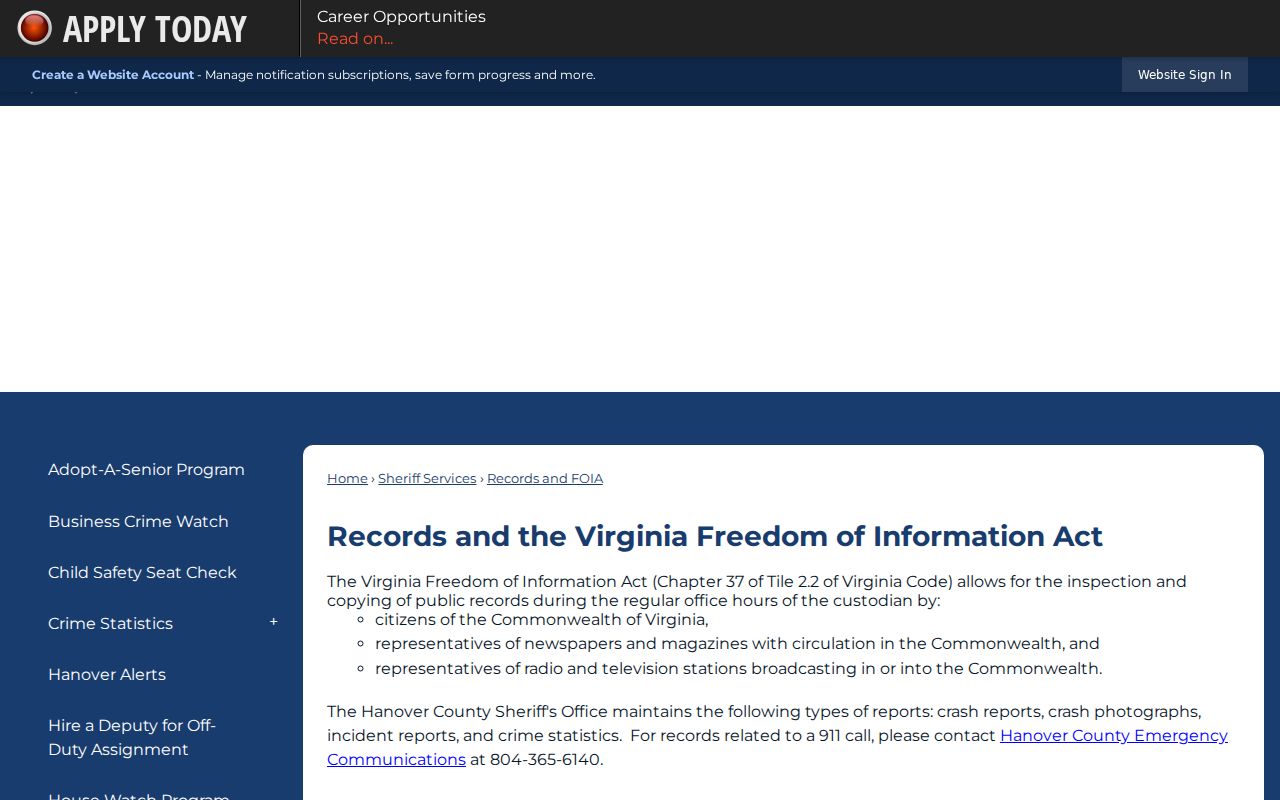
For a court docket or capias, the issuing clerk may be the better source.
Hanover County Clerk Copy Fees
Circuit copies cost 50 cents per page, with a $2 charge for a certified copy under the published fee page. HCSO lists a separate $6 local record check. Neither figure is a universal warrant fee, and the request must match the record the office actually keeps.
Use the Circuit Clerk’s copy procedure for a court file and HCSO Records for an agency-held item. A county FOIA request is not a substitute for a clerk’s case-record request. Verify current fees and access before sending payment.
The Circuit Clerk’s copy instructions show why court records have their own route.
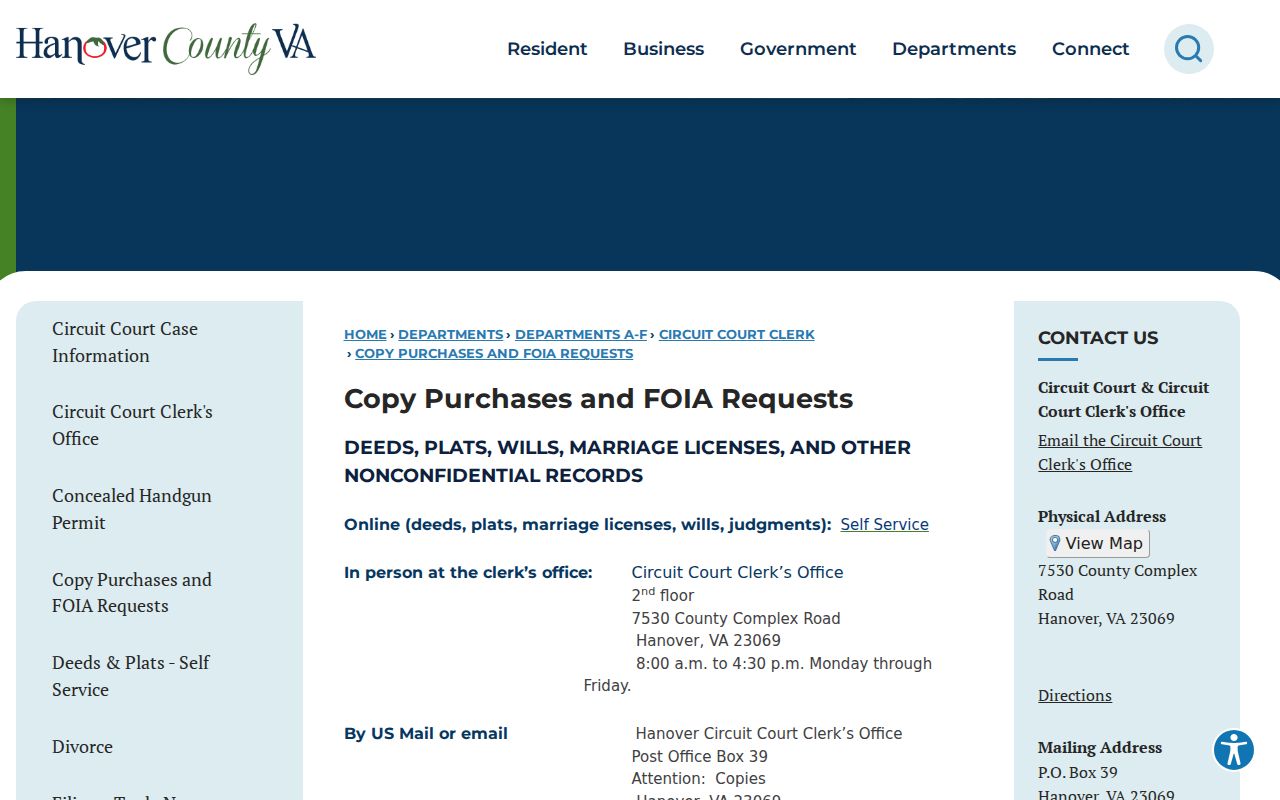
Use a case number or other locator when the clerk requests one.
Restricted Warrants and Access Rules
Virginia’s public-record law applies to public-body records with statutory exemptions, but clerk-held case records follow court rules and orders. Juvenile law-enforcement records have special limits under §16.1-301. Search-warrant and investigative material may also be sealed or withheld while disclosure could affect an investigation.
A limited result can reflect the source’s scope, not a finding that no process exists. Ask the clerk what can be released and request an exemption explanation if an agency withholds an existing record.
Key Rules:
Virginia Code §2.2-3704 governs public-body response duties and permits applicable exemptions; HCSO need not build a new database.
Virginia Code §16.1-301 restricts many juvenile law-enforcement records; use the JDR clerk for releasable case information.
A sealed or newly issued process may not appear in an online case search. Confirm with the court that controls the file.